
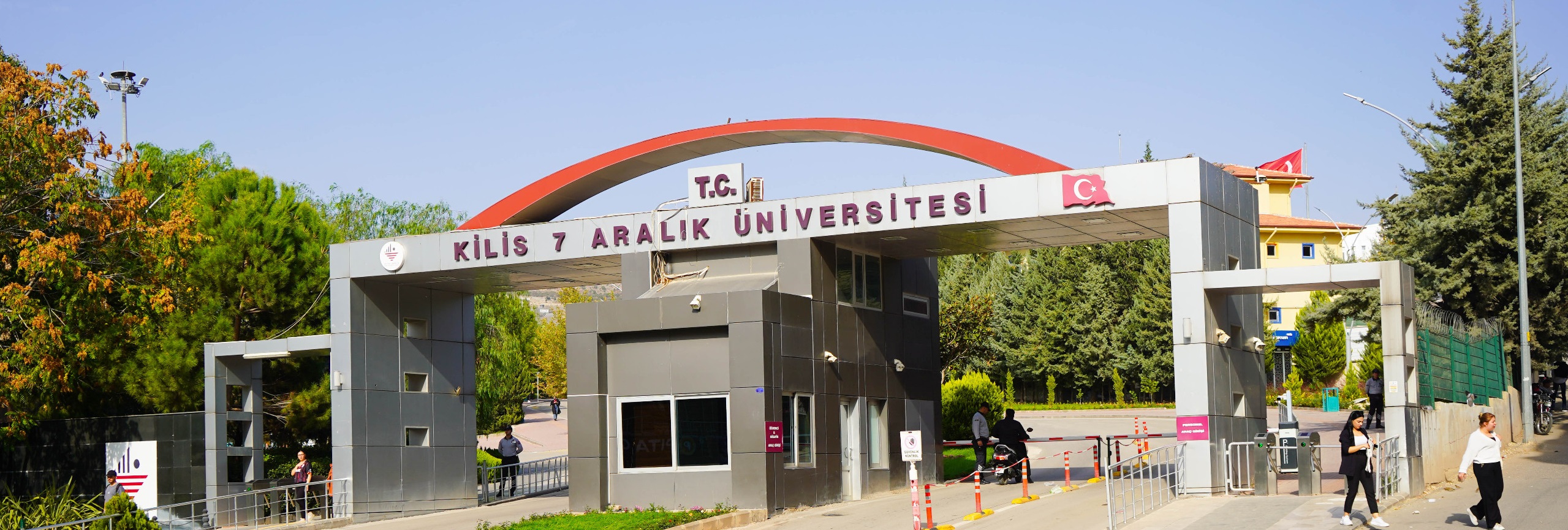
At Kilis 7 Aralık University, internationalisation performance is tracked regularly in order to monitor the level of achievement of institutional targets and to identify areas for improvement. That the monitoring mechanisms are established and sustainable and that monitoring results are converted into improvement steps and demonstrated with evidence is the core expectation within the maturity level of this sub-criterion.
Performance monitoring is not limited to reporting output figures. The approach covers the process-management infrastructure (standard process steps, digital systems, institutional communication channels), human-resource capacity, efficiency of resource use, the breadth and diversity of the partnership network and the linking of mobility outputs to qualitative targets. Performance monitoring is therefore handled as a whole, comprising data production, data verification, reporting and providing input to decision-making processes. [21]
Mobility and expenditure data under Erasmus+ are recorded and monitored through the Beneficiary Module application provided by the European Commission.
Mobilities and expenditure under national exchange programmes are recorded in the system through YÖKSİS.
Internal and inter-institutional correspondence is handled through the Electronic Document Management System (EBYS); Erasmus+ payments are made through the Central Expenditure Management System (MYS).
This digital infrastructure contributes to performance monitoring and reporting being conducted on the principles of accuracy, integrity and timeliness. [22]
The 2025 Activity Report states the office’s administrative staff as four. As of October 2026, the office has 1 administrative staff member, 1 research assistant, the office coordinator and 3 programme coordinators; the International Student Coordination Office has 1 further administrative staff member. The limited administrative capacity is monitored as an area for improvement in terms of workload and process continuity. [23]
Quantitative data on the Erasmus exchange programme show that, owing to pandemic restrictions, mobilities could only be carried out from September 2021 onwards and that regular data have been produced since 2021–2022.
| Period | Outgoing students | Outgoing staff | Incoming students | Incoming staff | Total |
|---|---|---|---|---|---|
| 2021–2022 | 20 | 15 | 0 | 0 | 35 |
| 2022–2023 | 29 | 17 | 0 | 0 | 46 |
| 2023–2024 | 15 | 8 | 1 | 0 | 24 |
| 2024–2025 | 8 | 11 | 0 | 1 | 20 |
Although outputs fluctuate from period to period, they are monitored regularly and a data set usable in performance evaluation is produced. The limited level of incoming mobility has been identified as an area for improvement. [24] [25]
Under Erasmus+ study mobility, since 2022–2023 71 students have studied for one semester at partner universities abroad; 26 students are currently abroad in the 2026–2027 Autumn semester. Mobilities are concentrated above all in Poland and Lithuania — partners that form a sustainable line of preference. [24] [25]
| Academic year | Outgoing students (study) |
|---|---|
| 2022–2023 | 29 |
| 2023–2024 | 15 |
| 2024–2025 | 8 |
| 2025–2026 | 19 |
| 2026–2027 (Autumn, ongoing) | 26* |
| Grand total | 71 |
Source: MYS (Central Expenditure Management System) payment records and the Erasmus Student Flow Tracking System, October 2026; details in the Outgoing Students 2022–2026 Activity Report. * 2026–2027 Autumn: students currently abroad; not included in the total.
The 9 universities with which Erasmus+ bilateral agreements were signed and/or renewed in 2025 (Poland 5, Romania 2, Bulgaria 2) show that cooperation with institutions from different countries is being sustained and diversified. Performance is monitored not only through mobility numbers but also through the sustainable cooperation infrastructure and agreement portfolio of the institution. [26]
The budget utilisation rates document shows that Erasmus+ grant use has been high from period to period and that resource management is reported in a traceable manner. Performance is evaluated on the basis of grant received, grant used, utilisation rate and project status (ongoing / completed); accepted project-based funds are taken into account as an indicator of resource-diversification capacity. [27]
An examination of the mobility data shows in particular that incoming student mobility has remained limited — a clear area for development. The data-based identification of areas open to development and their conversion into improvement steps is a core element of the quality-assurance approach.
The decisions were transferred to the action plan with the responsible unit, timetable and monitoring indicators defined; implementation outputs were evaluated at periodic monitoring meetings. The process risks and performance indicators defined in the workflow chart are reviewed at the start of each new project period. [28] [29]
The mechanisms and processes for monitoring internationalisation performance at the institution are established and sustainable; monitoring outputs provide input to reporting and decision-making processes; traceability has been strengthened through digital systems and institutional tools, while the limited administrative capacity is monitored as an area for improvement. [29]
Kilis 7 Aralık University · International Relations Office
Last updated: 22.10.2026