
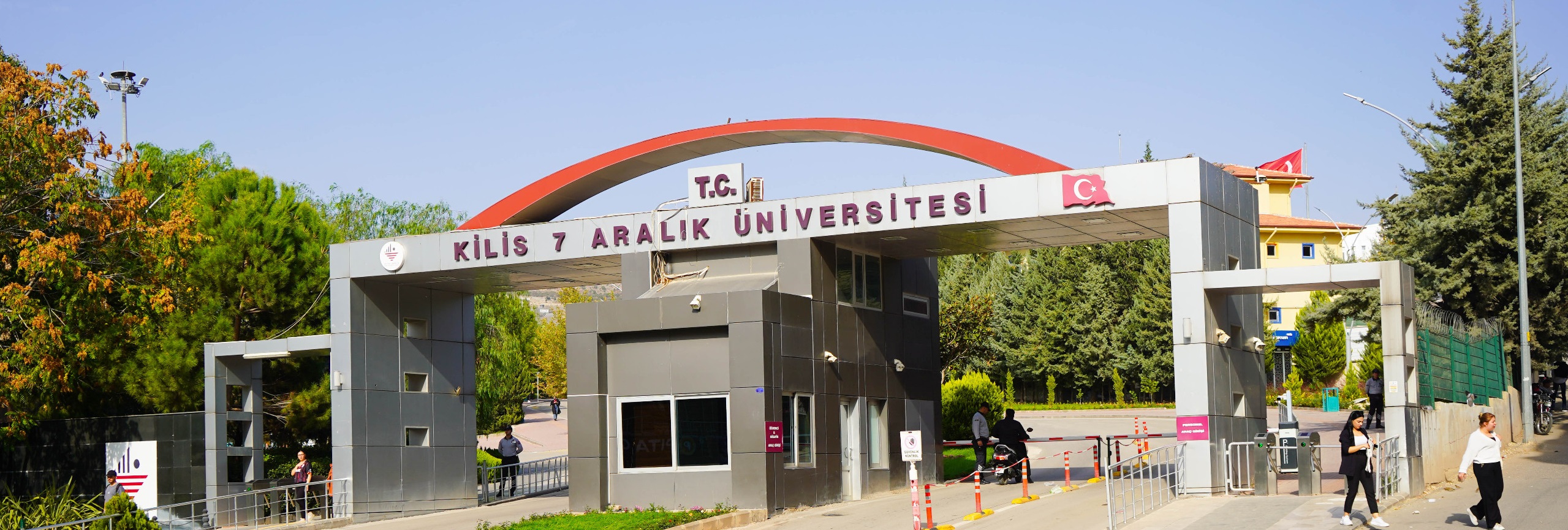
At Kilis 7 Aralık University, the management of internationalisation processes is coordinated within an institutional framework by the International Relations Office, which operates directly under the Rectorate. The procedures and principles concerning the establishment of the Office, its duties and responsibilities and the functioning of its governing bodies are set out in the “Regulation on the Establishment, Operation and Duties of the International Relations Office” which entered into force with Senate approval. This regulation is the main regulatory text supporting the conduct of activities on the principles of institutional accountability, delegation of authority, legal compliance, transparency and quality assurance. [1]
The governing bodies of the International Relations Office consist of the following components: [2]
This structure ensures that internationalisation processes are managed in an integrated way in both their strategic governance (policy, planning, monitoring) and operational implementation (application, selection, implementation, reporting, archive, financial transactions) dimensions.
As the legal representative of the University, the Rector is responsible for approving and signing applications, contracts and interim and final reports under international programmes (especially externally funded mechanisms such as Erasmus+), and secures the legal and financial dimension of activities at institutional level. [3]
As the senior manager to whom the Office reports directly, the Vice-Rector is primarily responsible for ensuring that all programmes and activities are carried out effectively, in a coordinated manner and in compliance with legislation on behalf of the University; he/she oversees coordination between units and alignment with institutional objectives. [4]
Appointed by the Rector from among faculty members with foreign-language skills and international experience for three years . Main duties: [5]
Chaired by the Vice-Rector in charge, it consists of the Office Coordinator and three programme coordinators. Its duties: [6]
Calls, applications, selection, implementation, grant management and reporting in student, academic and administrative staff mobility.
Bilateral/multilateral agreements, protocols, joint project development, participation in networks, promotion/representation.
Conducting admission, registration, promotion and integration processes in coordination with the relevant units.
This distribution clarifies process ownership and makes workload and expertise requirements manageable. [7]
Faculty Coordinators are appointed at faculty/institute/school/vocational school level and Department Coordinators at department/programme/sub-department level, ensuring coordination between the Office and academic units. Internationalisation is thus owned not only at central office level but also at academic unit level; course selection, recognition and credit-transfer processes run in harmony with mobility, and inter-unit coordination in international student integration is strengthened. [8]
Erasmus+ student and staff selection processes are conducted by the Erasmus Selection Committee, appointed by the Rectorate and defined in the regulation. Compliance with the procedures and principles of the Turkish National Agency and the provisions of the Erasmus Handbook is observed; members are determined by Rector’s approval. This mechanism ensures that selection decisions are taken within a framework of transparency, equality and legal compliance and contributes to it. [9]
The regulation stipulates that spending authority rests with the Rector and that, where necessary, this authority may be delegated to the Office Coordinator or, at the Coordinator’s request, to one of the relevant Programme Coordinators. The provision on the designation of the implementing officer is defined within the same framework, supporting the authority–responsibility relationship and the internal control approach in financial processes. [10]
The functioning of the structure is monitored through the regular meetings of the Executive Board and the programme coordination units. Indicators and risks relating to application, selection, mobility, agreement management, budget use, reporting and record-keeping processes are evaluated and improvement decisions are taken; the results are transferred to action plans with definitions of the responsible unit, target date and expected output. [11]
Preventive measures such as briefing senior management, a stakeholder communication plan, alternative scheduling, reserve-candidate management and documentation checklists are integrated into process management.
Digital monitoring: Erasmus+ student mobility is monitored, with the Erasmus Student Flow Tracking System developed by the Erasmus+ Institutional Coordinator, in six stages from application to file closure; missing documents, visa and payment status are reported automatically on the dashboard, and financial documents are generated from the system. Details →
The management of internationalisation processes is structured as an integrated system through a legislation-based institutional framework, senior management responsibility, a strategic governance body (Executive Board), specialised programme coordination units, faculty/department coordinators, a selection committee and financial authorisation mechanisms. Its functioning is secured on an evidence basis through regular monitoring, evaluation and improvement decisions.
Kilis 7 Aralık University · International Relations Office
Last updated: 22.10.2026